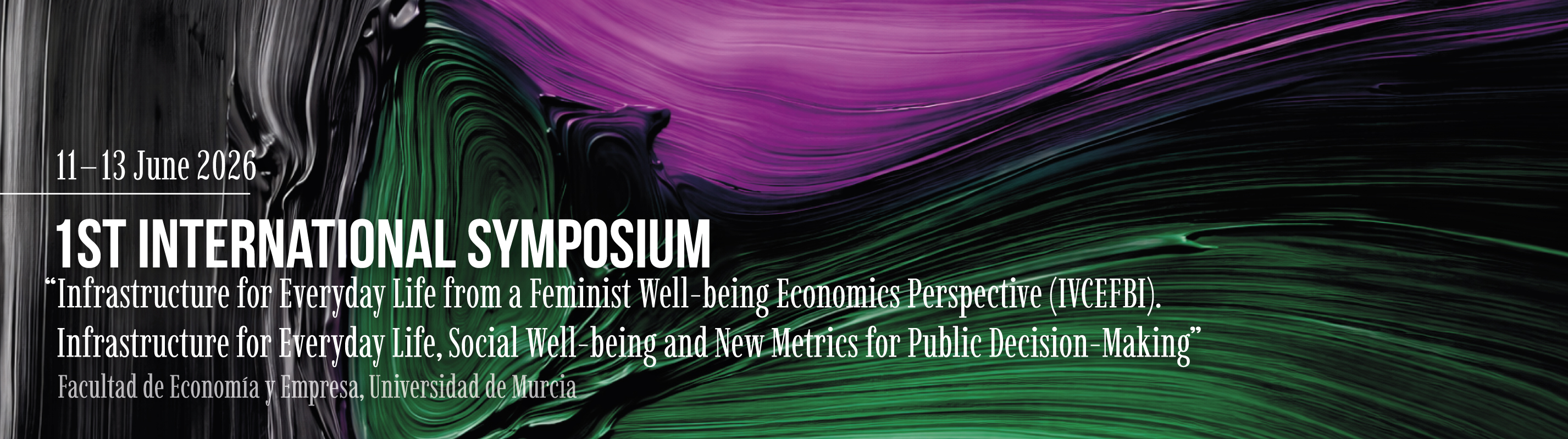





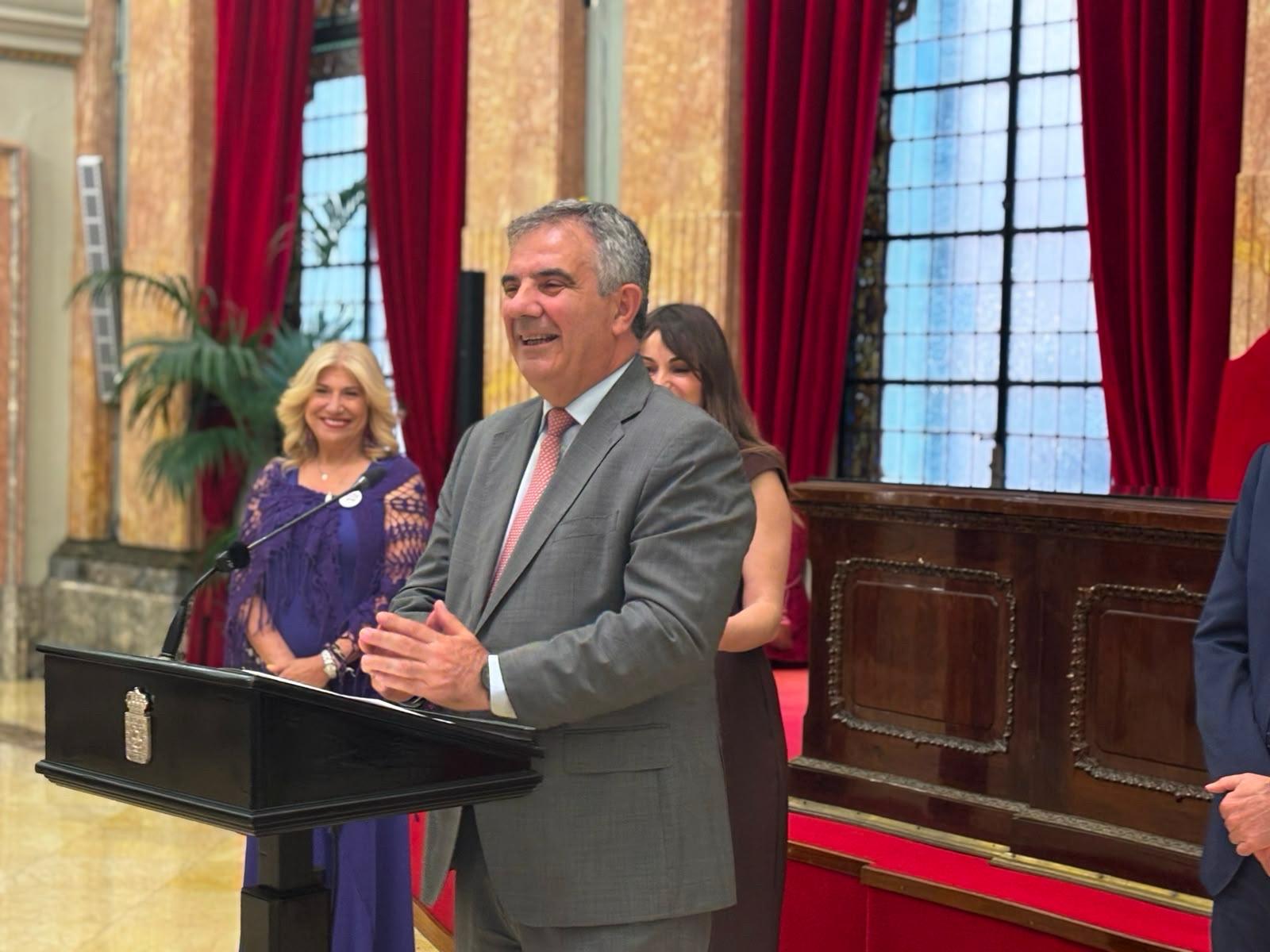
The 1st International Symposium “Infrastructures for Everyday Life from a Feminist Welfare Economics Perspective: Infrastructures for Everyday Life, Social Well-being and New Metrics for Public Decision-Making”brings together international experts to rethink how infrastructures that support everyday life—such as healthcare, education, transport, and public, cultural, and digital spaces—can be designed to enhance social sustainability and quality of life.
The symposium is part of the research project “Infrastructures for Everyday Life from a Feminist Welfare Economics Perspective” (PID2022-141305OB-I00), funded by the Spanish Ministry of Science, Innovation and Universities and the Women’s Institute of the Ministry of Equality (Grant File No. 18-2act-26), awarded under the 2026 and ii) Fundación Séneca – Science and Technology Agency of the Region of Murcia, Grant No. 23181/OC/26, 2026 Programme for the Organisation of Scientific and Technical Conferences and Meetings, Modality B: International Conference, It also forms part of the scientific activities of the international EuWIGeN network, coordinated by the University of Murcia.
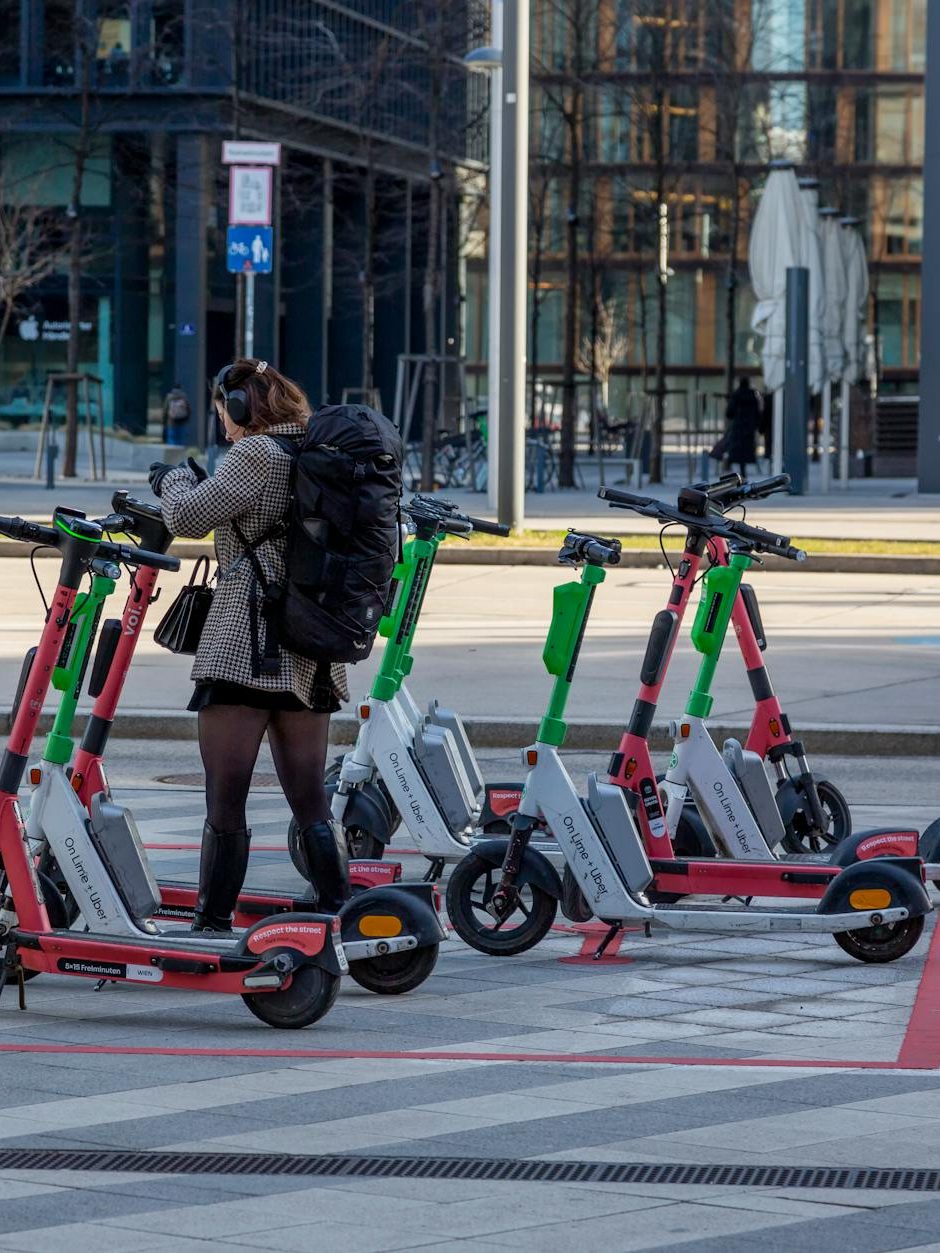
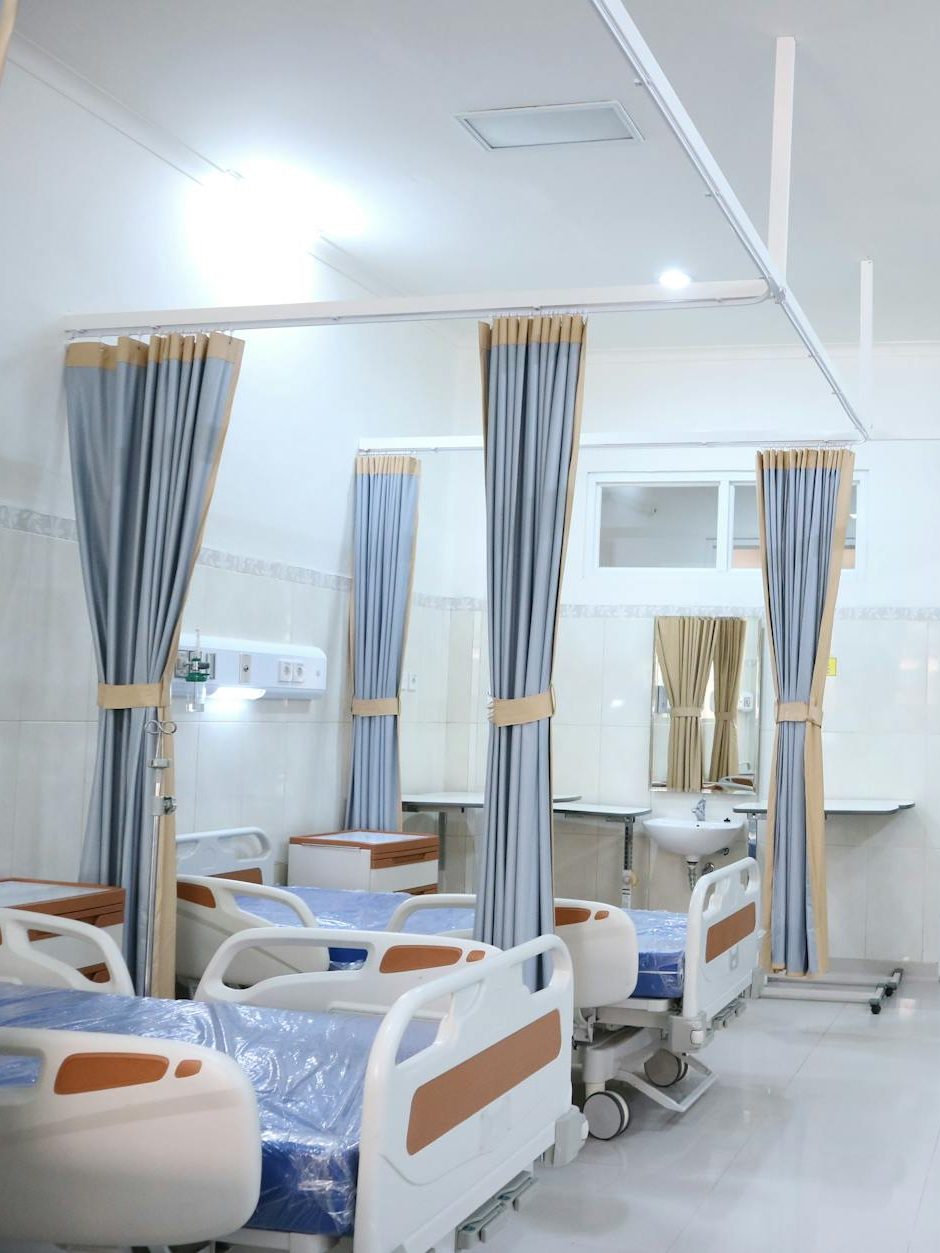
The symposium will place particular emphasis on the concept of “infrastructures for everyday life”, encompassing everything from essential services—such as healthcare, education, and transport—to public, cultural, and digital spaces that shape our daily lives. All of this will be approached from a perspective focused on social sustainability and quality of life.
In addition, the WIGI Index (Well-being and Infrastructure from a Gender Perspective Index) will be presented—an innovative indicator developed by the University of Murcia that enables the measurement of the real impact of infrastructures on people’s well-being. This tool, already recognised internationally, provides new insights for designing more efficient, inclusive, and results-oriented public policies.
This symposium not only opens up new lines of research but also proposes concrete solutions to improve public decision-making, positioning itself as an international benchmark in building a fairer, more sustainable, and people-centred development model.
Approach and Innovative Contributions
Research conducted within the research project Infrastructure for Everyday Life from a Feminist Well-being Economics Perspective (PID2022-141305OB-I00), funded under the 2022 Knowledge Generation Programme (Type B Oriented Research) of the Spanish Ministry of Science, Innovation and Universities and Fundación Séneca – Science and Technology Agency of the Region of Murcia, Grant No. 23181/OC/26, 2026 Programme for the Organisation of Scientific and Technical Conferences and Meetings, Modality B: International Conference and takes place within the framework of the international EuWIGeN network links public infrastructures to everyday life and proposes a new development indicator. Although these policies involve significant investment and have long-term effects, they have traditionally been treated as technical and neutral, overlooking their social impact.
This approach demonstrates that factors such as gender, income, age, place of residence, and care responsibilities shape access to and use of infrastructures, directly influencing well-being.
Thus, infrastructures are understood as key determinants of well-being, economic activity, and social cohesion, incorporating the concept of social sustainability: their capacity to sustain life under conditions of accessibility, safety, and balance.
From this perspective—still emerging and pioneering—a broad view is adopted that includes both physical and social infrastructures (such as education, healthcare, transport, public spaces, and telecommunications). This allows them to be analysed not only as economic support systems, but as the foundation of well-being and everyday quality of life.
Objectives of the Symposium
The main objective of the symposium is to transfer these approaches to the institutional sphere and to open a space for dialogue between research and public policy.
Specific objectives:
- To highlight the role of infrastructure in well-being and economic activity
- To introduce the concept of social sustainability into public policy design
- To present the WIGI Index as an innovative measurement tool and advance its future development
- To foster debate on new well-being metrics
- To build national and international institutional and academic partnerships
- To promote participation in European projects
Target Audience
The symposium is aimed at:
- Universities and research centres
- Policy-makers and technical staff within public administrations
- Financial institutions and foundations
- Social and economic stakeholders
The symposium is therefore conceived as a space explicitly oriented towards the transfer and practical application of knowledge and research to society.

Contents and Implementation of the Symposium
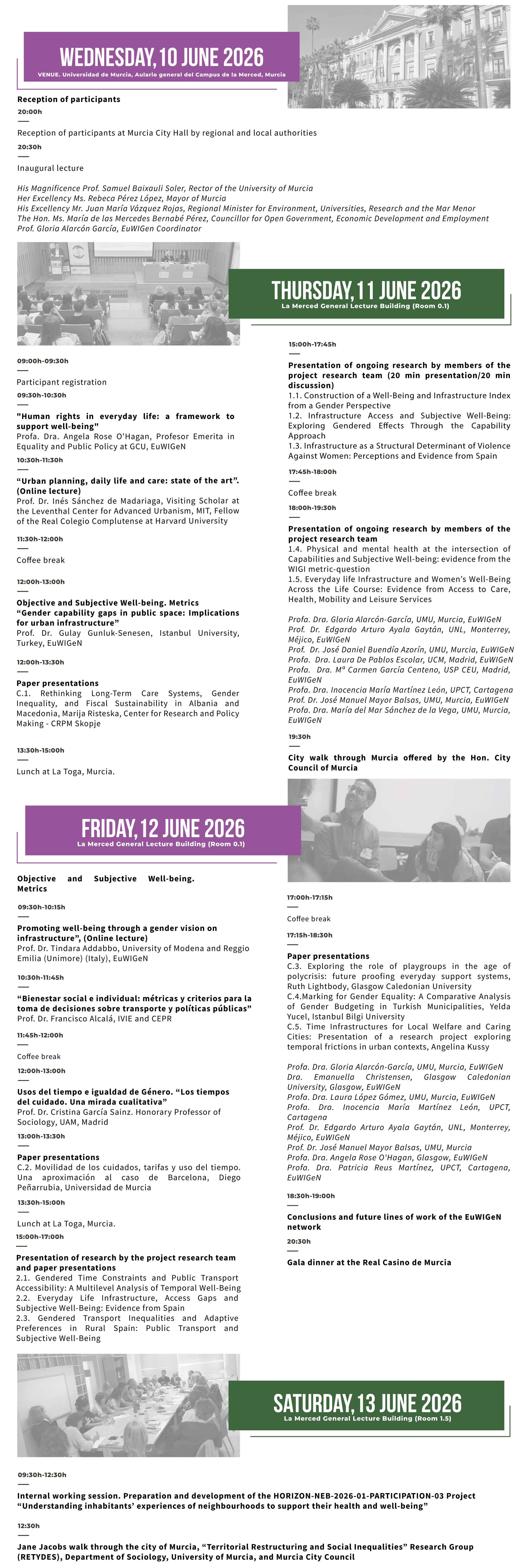
The symposium will be structured over two scientific days (11–12 June 2026) and one strategic day (13 June 2026), combining:
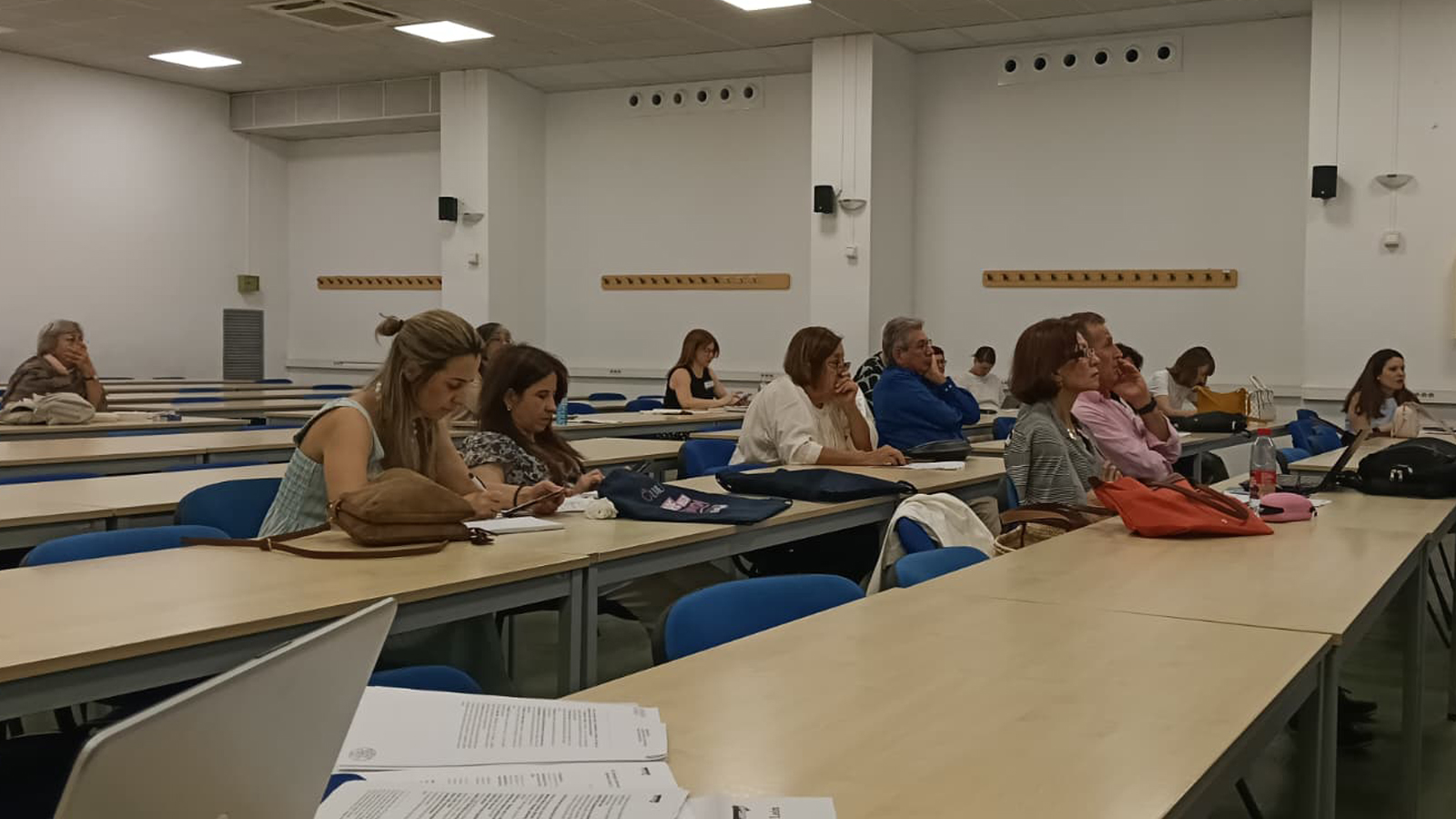
- Keynote lectures by international experts
- Thematic panels on infrastructure and well-being
- Dialogue spaces between public administrations and academia
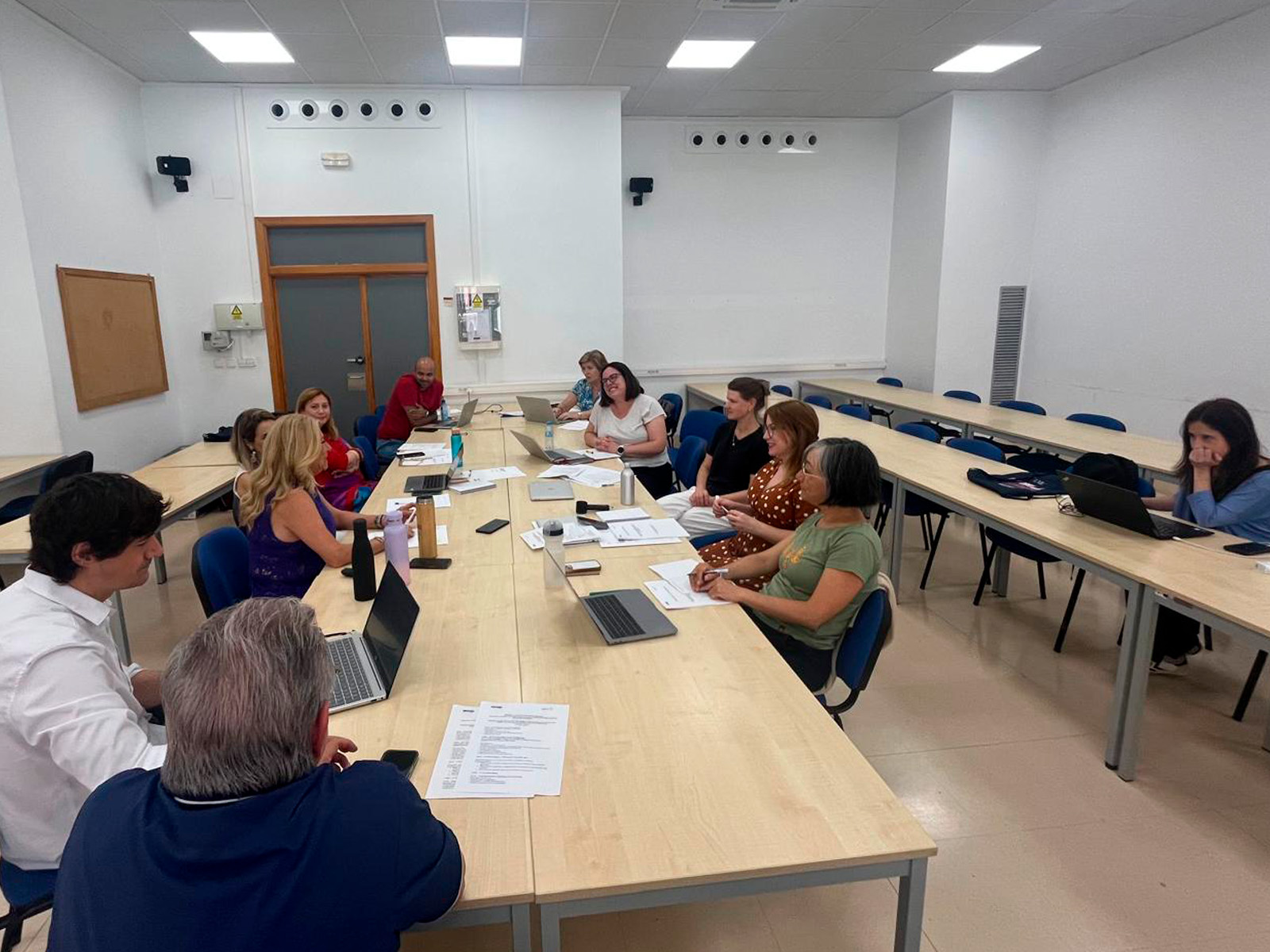
- Presentations of ongoing research, both by members of the research team and external researchers working in these fields
- The content will address, among other aspects:
- The impact of infrastructure on economic activity through its role in facilitating access to the labour market, physical and mental health, education, social relationships, leisure and, ultimately, quality of life
- The relationship between mobility, time-use organisation and productivity
- The role of public services in the efficiency of the economic system
- Citizens’ perceptions of well-being and their measurement
- Safety and the use of public space
The implementation of the planned activities will follow a structured and sequential approach, combining presentation, debate, knowledge production and transfer.
Program
Keynote lectures
Human rights in everyday life: a framework to support well-being
Profa. Dra. Angela Rose O’Hagan, Profesor Emerita in Equality and Public Policy at GCU, EuWIGeN
“Urban planning, daily life and care: state of the art”
Prof. Dr. Inés Sánchez de Madariaga, Visiting Scholar at the Leventhal Center for Advanced Urbanism, MIT
Objective and Subjective Well-being. Metrics “Gender capability gaps in public space: Implications for urban infrastructure”
Prof. Dr. Gulay Gunluk-Senesen, Istanbul University, Turkey, EuWIGeN
“Promoting well-being through a gender vision on infrastructure”
Profa. Dra. Tindara Addabbo, University of Modena and Reggio Emilia (Unimore) (Italy), EuWIGeN
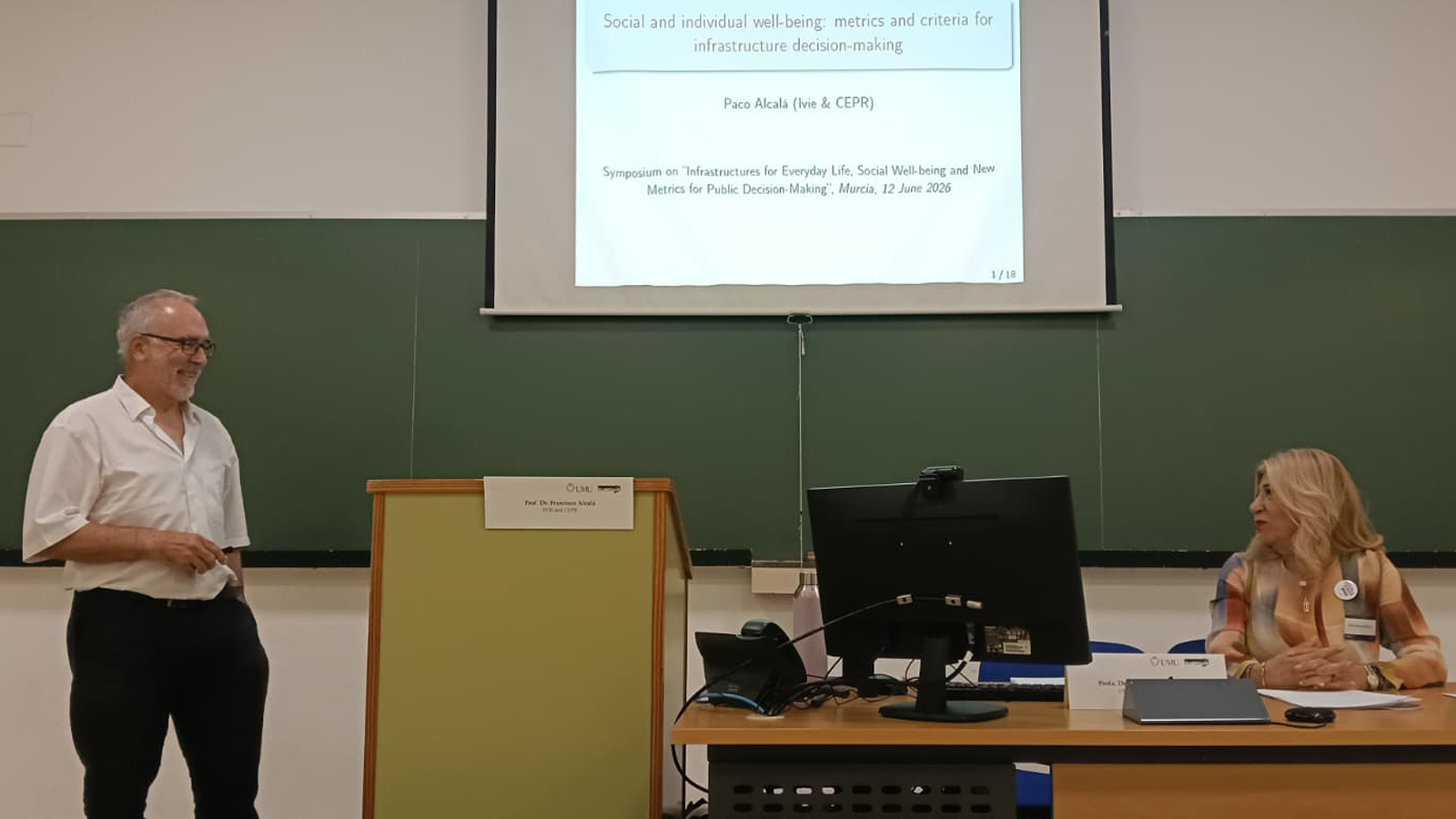
“Bienestar social e individual: métricas y criterios para la toma de decisiones sobre transporte y políticas públicas”
Prof. Dr. Francisco Alcalá, IVIE and CEPR
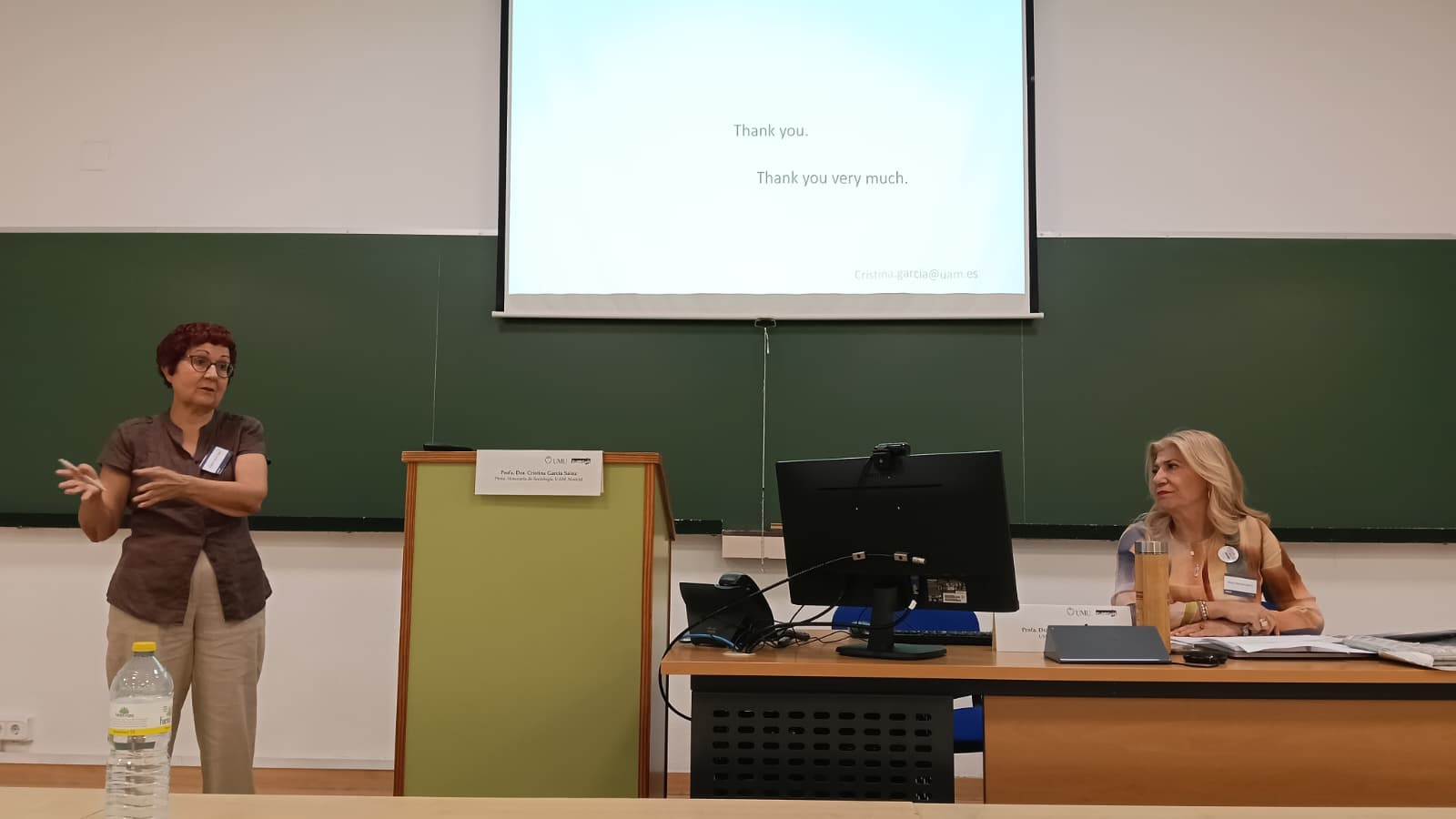
Usos del tiempo e igualdad de Género. “Los tiempos del cuidado. Una mirada cualitativa”
Profa. Dra. Cristina García Sainz. Profa. Honoraria de Sociología, UAM, Madrid
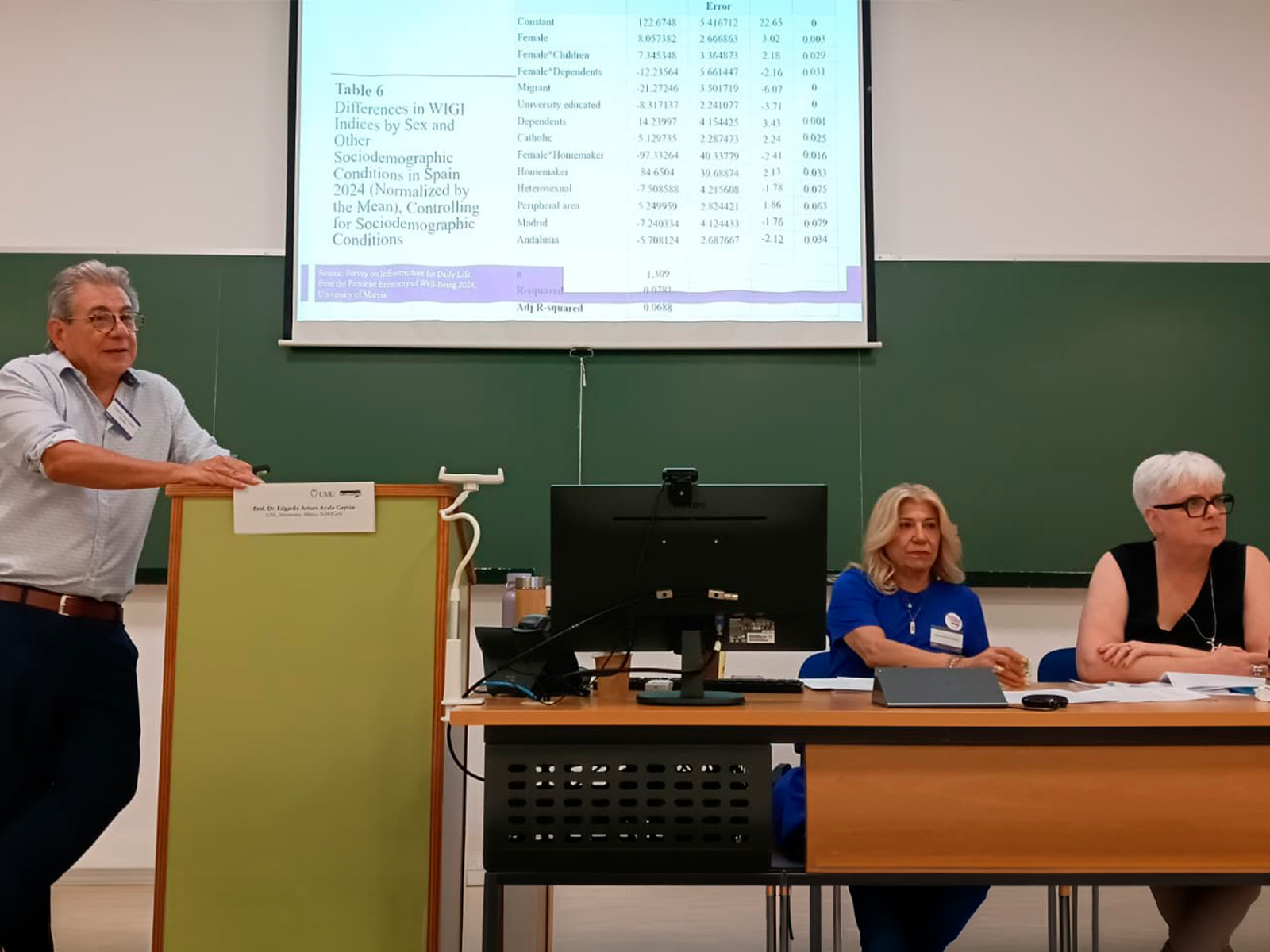
Ongoing research group
1.1. Construction of a Well-Being and Infrastructure Index from a Gender Perspective
1.2. Infrastructure Access and Subjective Well-Being: Exploring Gendered Effects Through the Capability Approach
1.3. Infrastructure as a Structural Determinant of Violence Against Women: Perceptions and Evidence from Spain
1.4. Physical and mental health at the intersection of Capabilities and Subjective Well-being: evidence from the WIGI metric-question
1.5. Everyday life Infrastructure and Women’s Well-Being Across the Life Course: Evidence from Access to Care, Health, Mobility and Leisure Services
2.1. Gendered Time Constraints and Public Transport Accessibility: A Multilevel Analysis of Temporal Well-Being
2.2. Everyday Life Infrastructure, Access Gaps and Subjective Well-Being: Evidence from Spain
2.3. Gendered Transport Inequalities and Adaptive Preferences in Rural Spain: Public Transport and Subjective Well-Being
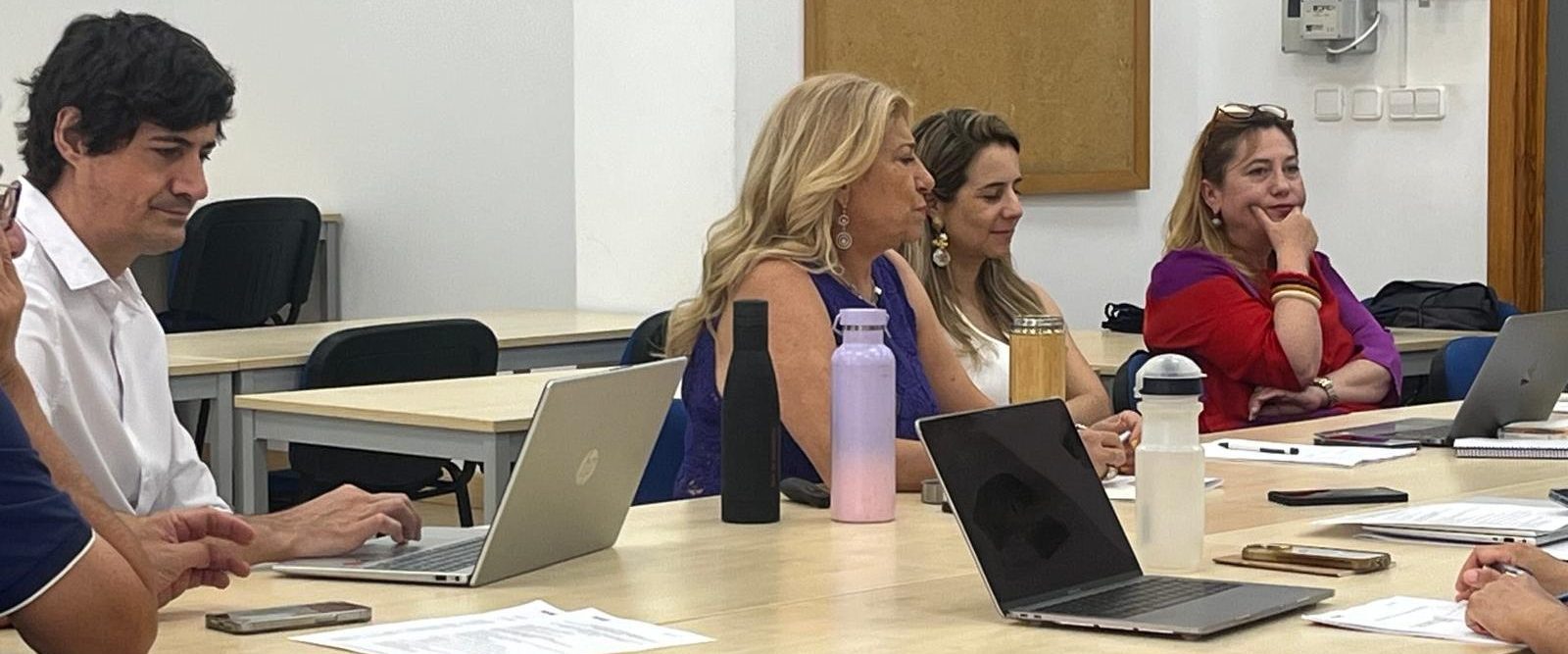
External Papers
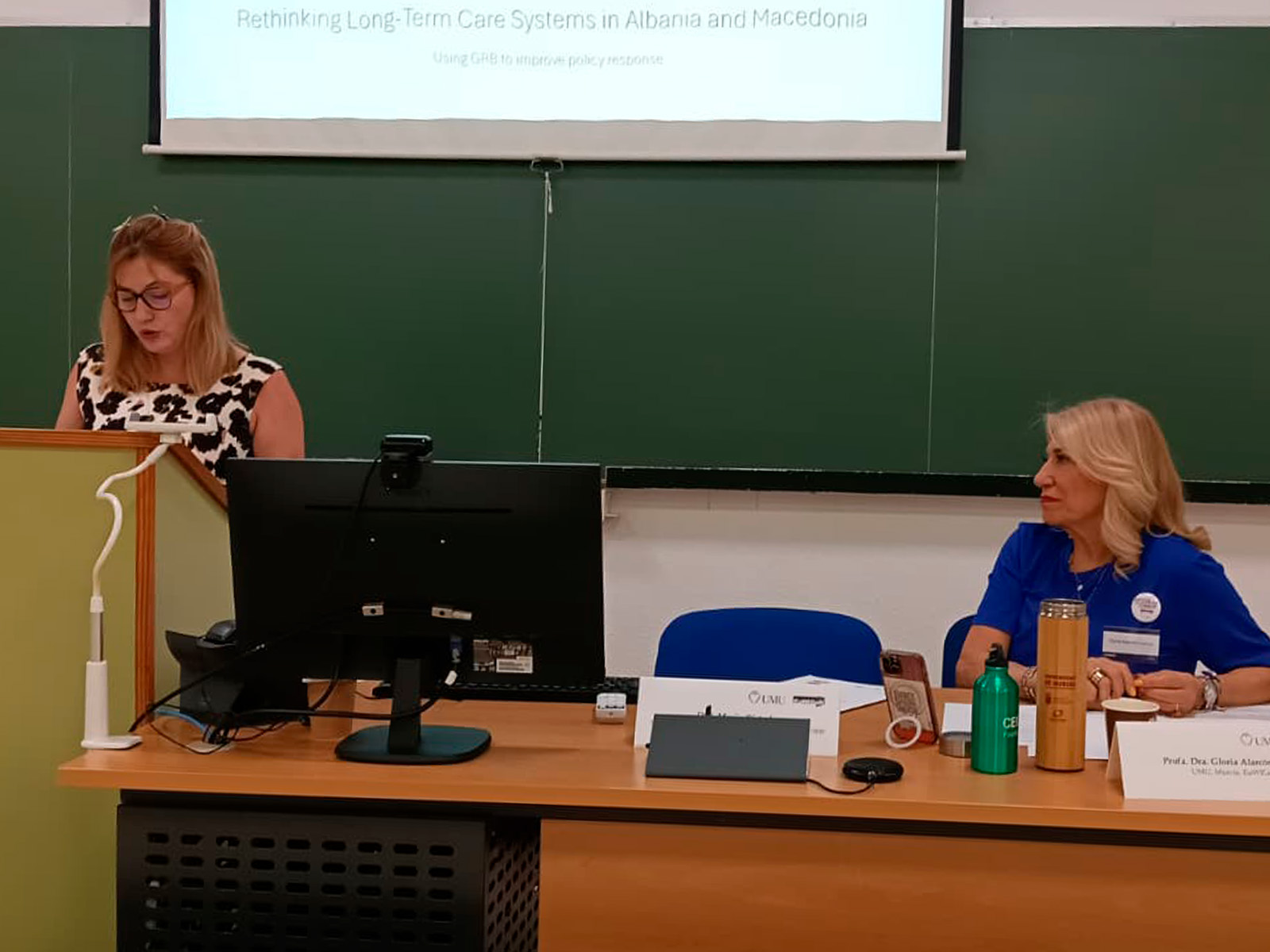
C.1. Rethinking Long-Term Care Systems, Gender Inequality, and Fiscal Sustainability in Albania and Macedonia
Presenter: Marija Risteska CRPM Skopje
BIO: Marija Risteska holds PhD in political science. She is the founder and Executive Director of the Centre for Research and Policy Making, which has received a Japanese Medal for Outstanding Research in development in 2016 and PASOS Think tank award in 2010 and 2013. In 2023 CRPM was nominated for the World Democracy Award of Council of Europe for its gender budget work.
For 20 years Marija specializes in gender mainstreaming in policies, budgets and programs/projects. She is co-author of the universities text book Gender Responsive Budgeting; and has recently edited the Springer Nature publication Gender Responsive Budgeting in Southern European Context
This paper positions long-term care (LTC) systems as essential infrastructure for everyday life, critical to social well-being, labour market performance, and fiscal sustainability in ageing societies. Focusing on Albania and North Macedonia, it examines how demographic ageing, migration, and persistent gender inequalities are reshaping care needs while exposing structural weaknesses in existing systems. Both countries face rapidly increasing demand for care alongside limited formal provision and strong reliance on unpaid family care. In Albania, approximately 21.6% of older persons already require long-term care, with demand projected to rise significantly by 2050, placing growing pressure on public expenditure and service delivery systems . In North Macedonia, long-term care remains fragmented across health and social protection systems, with uneven access and insufficient capacity, particularly at the community level. Current projections indicate a steady increase in LTC spending, driven by demographic trends and rising dependency rates. The paper highlights how unpaid care—predominantly carried out by women—functions as a hidden pillar of welfare systems. However, this reliance reinforces gender inequalities by limiting female labour force participation, reducing lifetime earnings, and weakening the contribution base for public finances. As a result, care deficits translate into broader macroeconomic and fiscal challenges. Building on this analysis, the paper introduces the concept of care as infrastructure, arguing for the integration of LTC into core public investment frameworks and decision-making metrics. It proposes new measurement approaches that capture the social and economic returns of care investments, including their impact on employment, productivity, and long-term fiscal stability. The paper concludes by outlining policy pathways for Albania and North Macedonia, emphasizing the expansion of community-based services, gender-responsive budgeting, and integrated care systems. Recognizing care as infrastructure is essential for achieving inclusive growth, social resilience, and sustainable public finance in both countries.
Keywords: Long term care, demographic dynamics, ageing, community based services, gender equality
C.2. Movilidad de los cuidados, tarifas y uso del tiempo. Una aproximación al caso de Barcelona
Presenter: Diego Peñarrubia, Universidad de Murcia
BIO: Diego Peñarrubia holds a PhD in Economics from the University of Murcia, where he has taught Microeconomics and Macroeconomics for over three decades. During this time, he has published numerous articles, particularly in the field of Industrial Organization.
He has also held positions outside the University, including in the office of the Government Delegation and its Development Department, and as director of the Cartagena Local Development Agency. He has also carried out infrastructure projects for the Ministry of Transport and the Barcelona City Council, and housing projects for the Economic and Social Council of the Region of Murcia.
The aim of this contribution is to summarise the work carried out by Gloria Alarcón, Diego Peñarrubia, and José Manuel Mayor for the Department of Culture, Education, Life Cycles, Feminisms and LGBTI of the Barcelona City Council, entitled Fare Analysis of Barcelona’s Public Transport from a Gender Perspective: A Caring City Is Also Designed Through Its Fare System, during 2025.
Although, as its title indicates, the study was intended to evaluate the fare structure, establish a diagnosis, and formulate proposals from a gender perspective, the research ultimately enabled us to develop a broader perspective, which is the focus of this contribution.
The methodological approach of the study can be summarised in four components: a review of the extensive literature on the various issues addressed; a statistical analysis of the results of the Weekday Mobility Survey (EMEF, by its Catalan acronym); a series of in-depth interviews with academic experts and professionals from companies and institutions working in this field; and, finally, focus group discussions with users of the Barcelona Metropolitan Transport System (BMTS, to avoid the proliferation of acronyms that make up the system), selected to reflect differences in age, gender, and mobility patterns.
Keywords: Infrastructures for Everyday Life, Care Mobility, Transport Fares, Urban Mobility, Feminist Economics.
C.3. Exploring the role of playgroups in the age of polycrisis: future proofing everyday support systems
Presenter: Ruth Lightbody, Glasgow Caledonian University
BIO: Ruth Lightbody is a Senior Lecturer in Politics at Glasgow Caledonian University and Deputy Director of the Scottish Poverty and Inequality Research Unit. Her research focuses on deliberative and participatory democracy, community engagement, and the role these approaches can play in shaping policies that reduce social inequalities.
A key strand of Ruth’s work examines the often-overlooked contributions of women as knowledge producers and evidence providers in policymaking. More recently, she has explored the role of parent and baby groups (playgroups) as important spaces for knowledge exchange, social capital development, and trauma-informed support for perinatal women and families.
Ruth has led research projects funded by the British Academy, Scottish Government, and the Royal Society of Edinburgh. In 2023, she was awarded an Academic Fellowship at the Scottish Parliament, where she developed an evaluation framework to measure deliberative principles and practices within parliamentary processes.
Her current work includes initiatives focused on early years care provision in Glasgow and the development of a Whole Family Approach in collaboration with the Scottish Government’s Place Based Social Justice Team. Through her research, policy engagement, and partnership work, Ruth seeks to strengthen democratic participation and support more equitable outcomes for communities and families.
Parent/carer and baby groups (playgroups) are everyday gatherings, which are convened the length and breadth of the UK, in a wide range of communities. Playgroups provide parents/carers with much needed support and serve as vital routes to developing social networks for knowledge exchange and social capital (Lightbody 2024). Low mental health among perinatal women is a pressing social issue experienced by women in Scotland and the wider UK. Feeling connected, heard, supported and part of a group or community can play an important part in offsetting feelings of low mental health and loneliness. This is important for the whole family and, in turn, can potentially take pressure off other services such as health and formal childcare provisions. This research aims to understand the role of playgroups as a vehicle for building long term wellbeing and feelings of connectedness for families. It showcases many parent’s experiences of finding playgroups a safe space for them and their children. This presentation first sets out what these groups provide for their members and the wider communities. It then explores the barriers which face mothers and families reaching these informal support systems, looking at the reduction of services such as closure of community centres and libraries, and accessibility and infrastructure issues like transport, weather, suitable indoor and outdoor spaces. Finally, I consider what can be done to ensure these services are future proofed.
Keywords: Playgroups, wellbeing, communities, families, everyday support systems
C.4.Marking for Gender Equality: A Comparative Analysis of Gender Budgeting in Turkish Municipalities
Presenter: Yelda Yucel, Istanbul Bilgi University
BIO: Yelda Yücel is a Professor of Economics at Istanbul Bilgi University. From 1997 to 2009, she served as an economist within the Economic Research and Strategic Planning departments at Yapı Kredi Bank. Her research focuses on economic crises, labor markets, public finance, and gender-responsive budgeting. She has collaborated with various international institutions on projects regarding gender and economics, human rights cities, and inclusive trade in Turkey. Currently, she is a member of the International Association for Feminist Economics (IAFFE), the European Gender Budgeting Network (EGBN), and the Feminist Academicians and Researchers Working on Women’s Labor (KEFA) in Turkey.
Gender budgeting (GB) has been pursued at both local and national levels across diverse contexts, though progress remains uneven. Despite notable advances in conceptual and methodological frameworks, persistent challenges in assessment constrain its institutionalization. This study extends GB evaluation in Türkiye by introducing a gender marker approach, a method widely employed in international practice. Examining four municipalities, it develops an evaluation matrix encompassing institutional and legal structures, planning processes, and budget cycles. Findings indicate that GB has not been fully internalized, with inconsistencies between stated gender equality commitments and actual allocations, resources, indicators, and activities.
Keywords: gender equality, gender budgeting, gender markers, municipalities, Türkiye
C.5. Time Infrastructures for Local Welfare and Caring Cities: Presentation of a research project exploring temporal frictions in urban contexts
Presenter: Angelina Kussy, University Pompeu Fabra
This contribution draws on early insights from the Horizon Europe Driving Urban Transitions project Spatio-temporal Conditions in 15-Minute Cities: Exploring the Use Case of Time Offices (SPATIOTEMPO). In Barcelona, Vienna, and Bolzano, researchers, municipal authorities, and local communities collaborate through time-use surveys, qualitative research, and co-design workshops to map and analyse the spatio-temporal conditions of selected neighbourhoods.
SPATIOTEMPO starts from the premise that everyday life is shaped by temporal frictions arising from the interaction of multiple rhythms that may coexist harmoniously or come into conflict. From this perspective, spatio-temporal conditions refer to the ways in which the organisation and governance of space and time influence everyday life and can be assessed, mapped, and transformed through urban planning. Infrastructures are therefore understood not merely as spatial configurations but as rhythmic constellations in which space and time are fundamentally intertwined. They encompass not only physical environments but also the routines, services, and institutional processes that unfold across different temporalities, including opening and working hours, transport schedules, and seasonal variations.
Examining these urban rhythms—such as the opening hours of care and health services, mobility systems, the timing of food access, the availability of cooling and green spaces, and civic spaces for collective gathering—draws attention to concrete questions of everyday provisioning and social justice. At what times is a food market accessible to someone working irregular shifts? Where do temporal and spatial opportunities exist for assemblies or political meetings? When can an unpaid carer realistically reach a health clinic by public transport? (Sardadvar & Reiter, 2023; Dengler et al., 2025).
These preliminary insights invite reflection on how existing spatio-temporal arrangements produce unequal forms of provisioning while simultaneously revealing opportunities for residents and local institutions to collectively reconfigure them in line with pluriversal approaches to provisioning. Building on this perspective, we outline practical pathways for politicising spatio-temporal infrastructures to reduce time poverty, reorganise social reproduction, better synchronise food, mobility, and care rhythms across urban–rural territories, and create institutional conditions for post-growth ways of life grounded in caring democracies.
Supporting Universities and Organisations
- Association of Men for Gender Equality (Madrid, Spain)
- State Feminist Policy Forum Association (Madrid, Spain)
- Lyceum Association, Science Region of Murcia (Murcia, Spain)
- Chair of Social Innovation, University of Murcia (Murcia, Spain)
- Federation of Women’s Organizations of Lorca (Murcia, Spain)
- Isadora Duncan Foundation (León, Spain)
- Glasgow Caledonian University, Scotland (United Kingdom)
- Technological Institute of Monterrey, TEC, Monterrey (Mexico)
- Polytechnic Institute of Porto, Porto (Portugal)
- Autonomous University of Nuevo León, Monterrey (Mexico)
- Jaume I University of Castellón, Isonomia Foundation (Castellón, Spain)
- Miguel Hernández University of Elche, Centre for Gender Studies Research (Elche, Spain)
- Polytechnic University of Cartagena, Equality Unit Directorate (Cartagena, Spain)
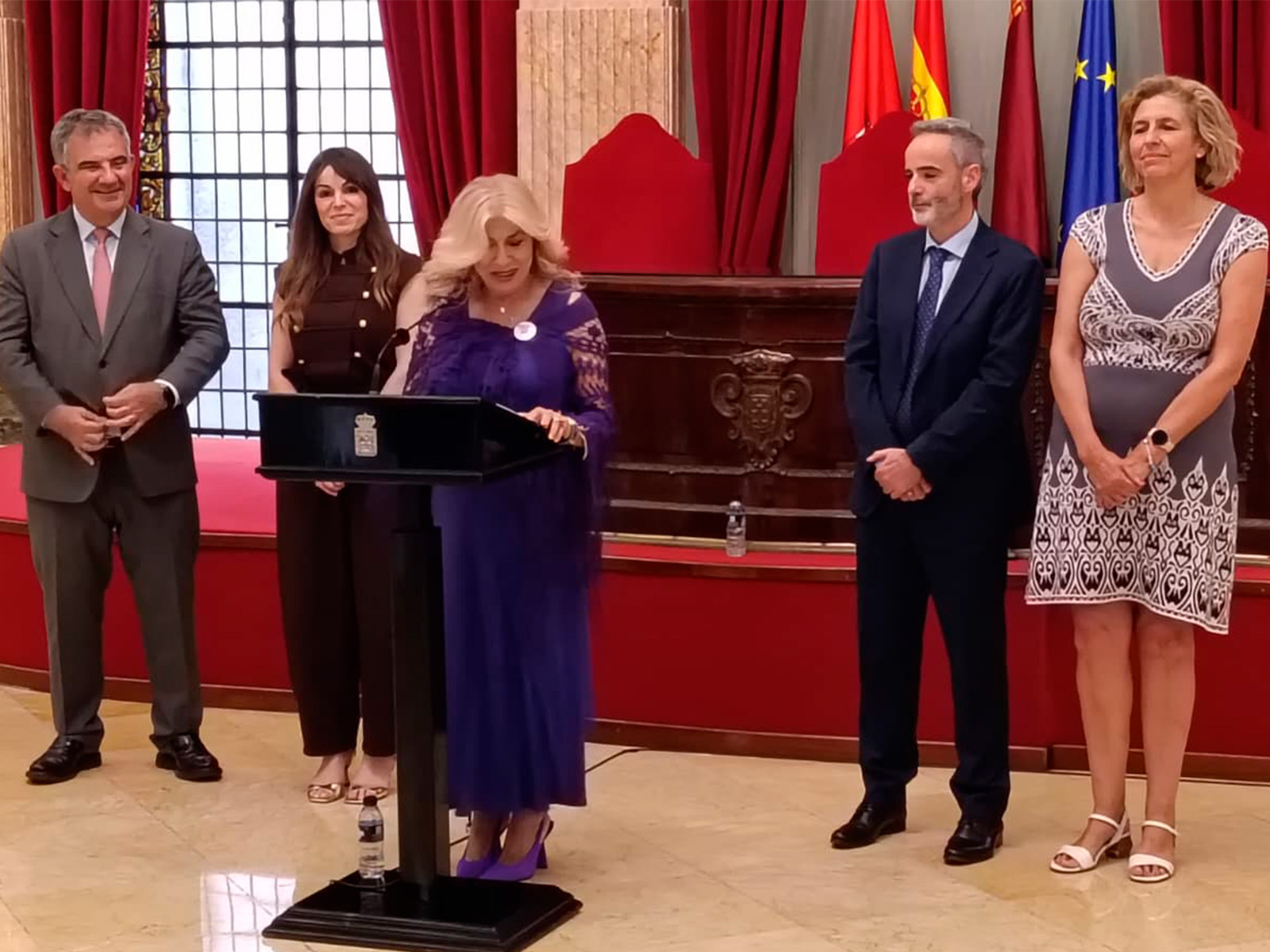
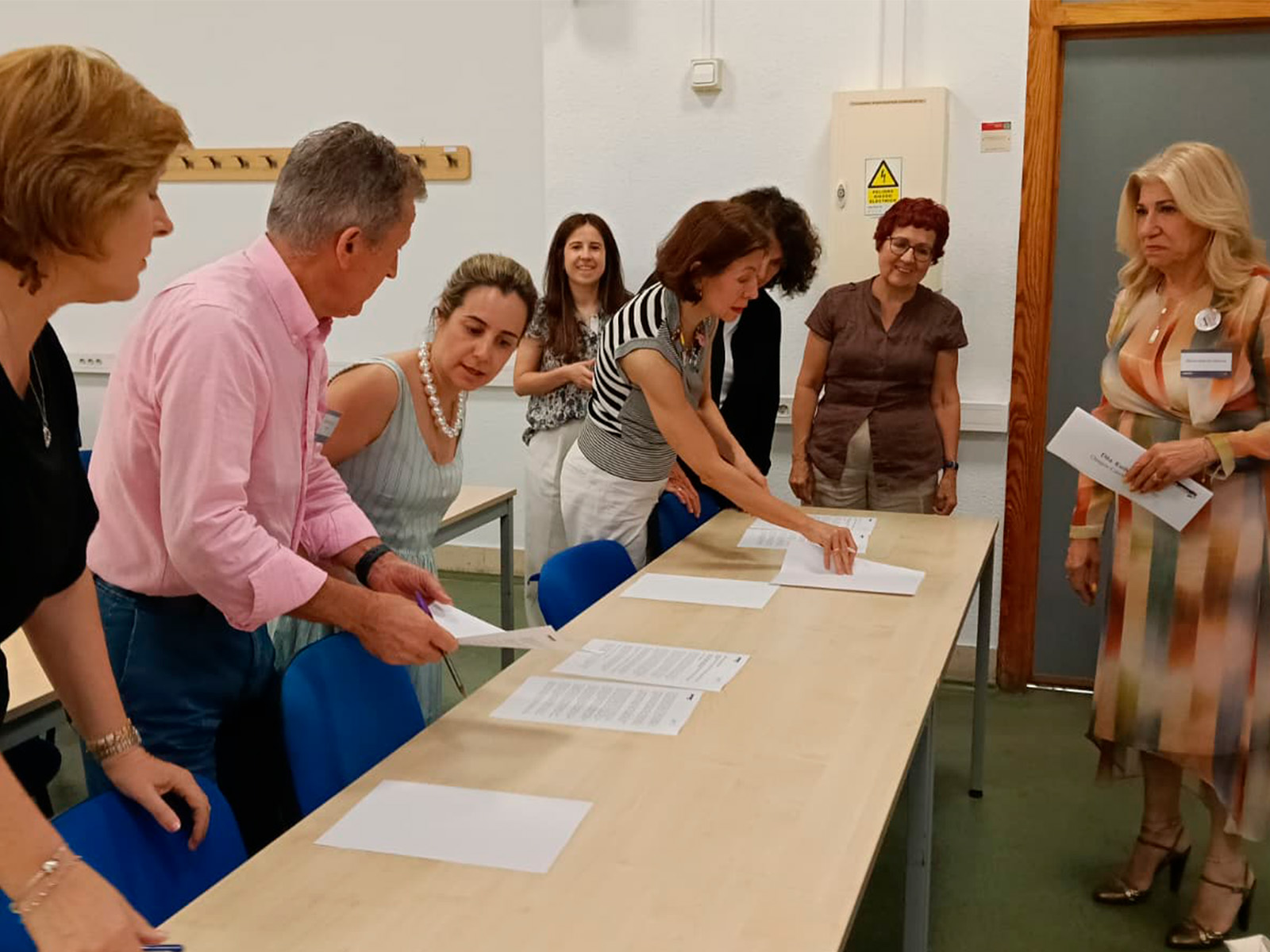
Sponsoring organizations of the 1st Symposium
- Women’s Institute – Ministry of Equality (Madrid, Spain)
- Murcia City Council (Murcia, Spain)
- Regional Ministry of the Environment, Industry, Universities, Research and Mar Menor, CARM (Murcia, Spain)
- El diariomurcia.es (Murcia, Spain)
- Federation of Women’s Organizations of Lorca (Murcia, Spain)
- Cajamurcia Foundation (Murcia, Spain)
- Seneca Foundation (Murcia, Spain)
- Territorial Restructuring and Social Inequality Research Group, University of Murcia (Murcia, Spain)
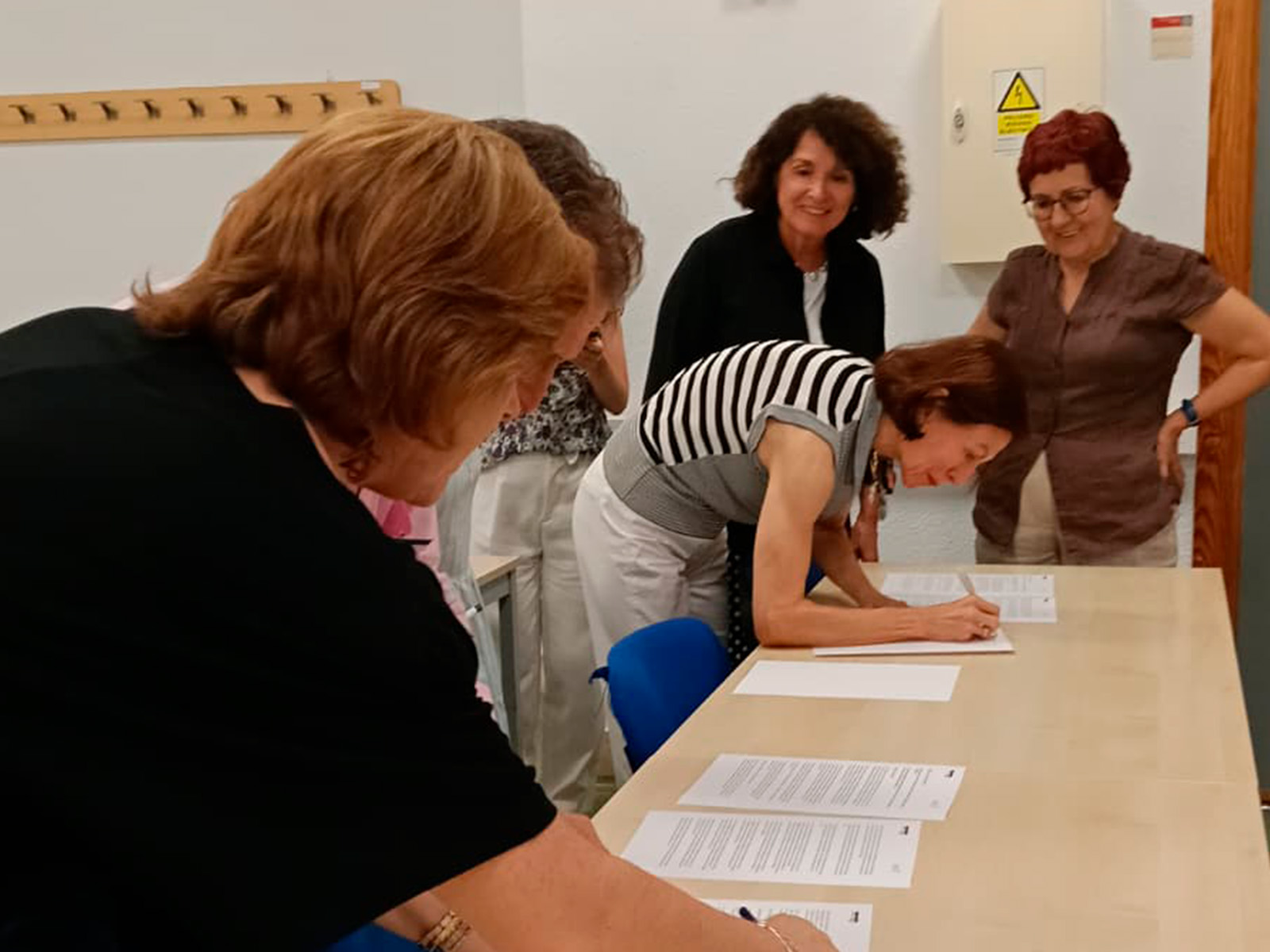
Declaration 2026
The Murcia Declaration 2026 is the outcome of the 1st International Symposium “Infrastructure for Everyday Life from a Feminist Well-being Economics Perspective. Infrastructures for Everyday Life, Social Well-being and New Metrics for Public Decision-Making”, held in Murcia on 11–13 June 2026. It invites universities, public administrations, research centres, international organisations, professional associations, and civil society organisations to endorse a shared international agenda that places well-being at the heart of public policy.
Read the full Declaration below and support this initiative by signing through the endorsement link.
Information of interest

Travel information
- Nearest airport: Alicante (ALC) – approx. 1 hour
- Madrid → Murcia: Train ~3h (recommended) but also bus (Alsa Company)
- Valencia → Murcia: Bus ~3h but also train (Renfe)
- Alicante → Murcia: Direct bus (Alsa Company) ~1h (best option)
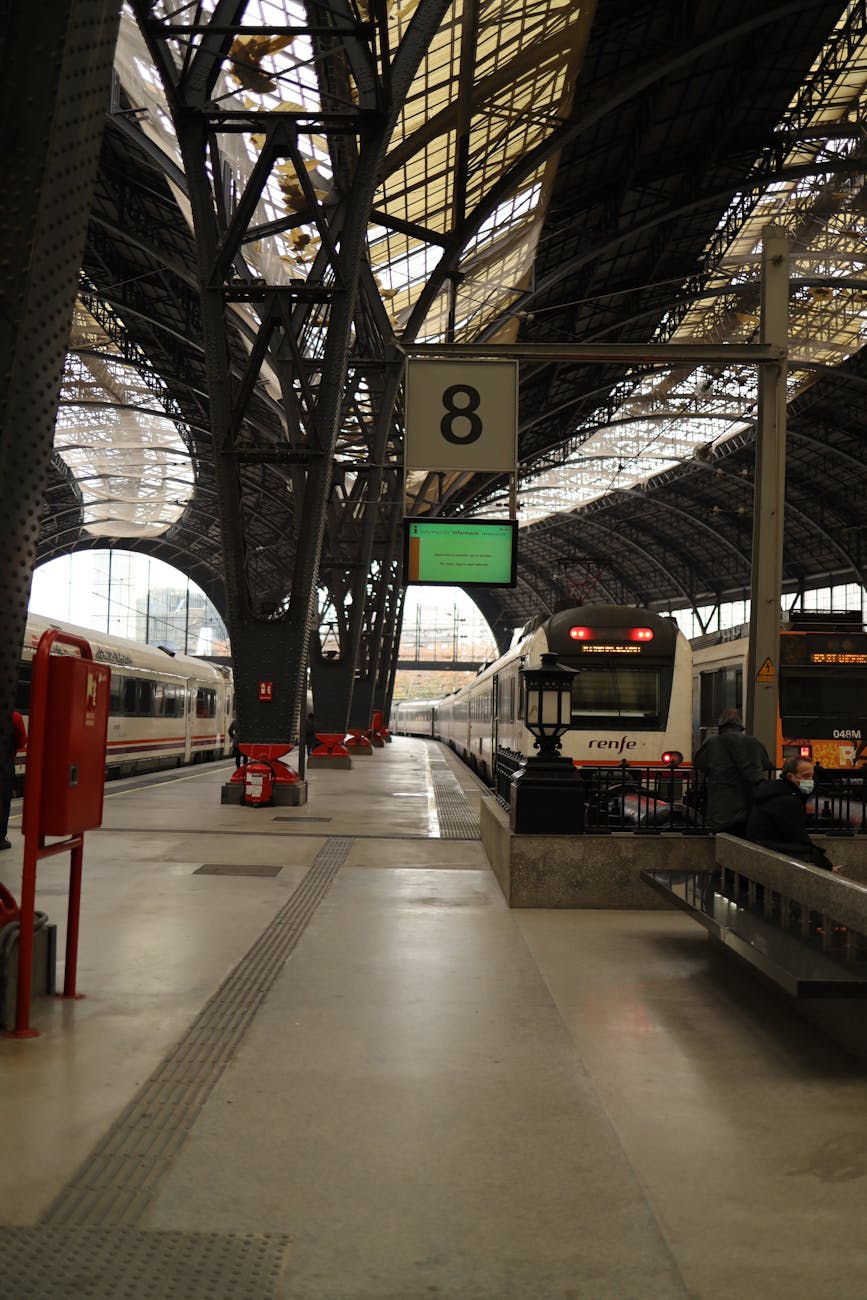
Arrival in Murcia
Train station: Murcia del Carmen (Plaza de la Industria, s/n, 30002 Murcia)
Bus station (C. Sierra Pila, 30005 Murcia)
Taxi, Uber (available)
Direct buses from Alicante Airport to Murcia depart every hour at :15 past the hour, with the last direct service at 21:15. The approximate ticket price is €6.50
We strongly recommend purchasing your ticket in advance through the official ALSA website
If you arrive after the last direct bus departure, you will need to take a taxi to Murcia. To obtain a more competitive fare, please contact us in advance and we will be happy to provide information about recommended taxi services and estimated prices

Recreational activities
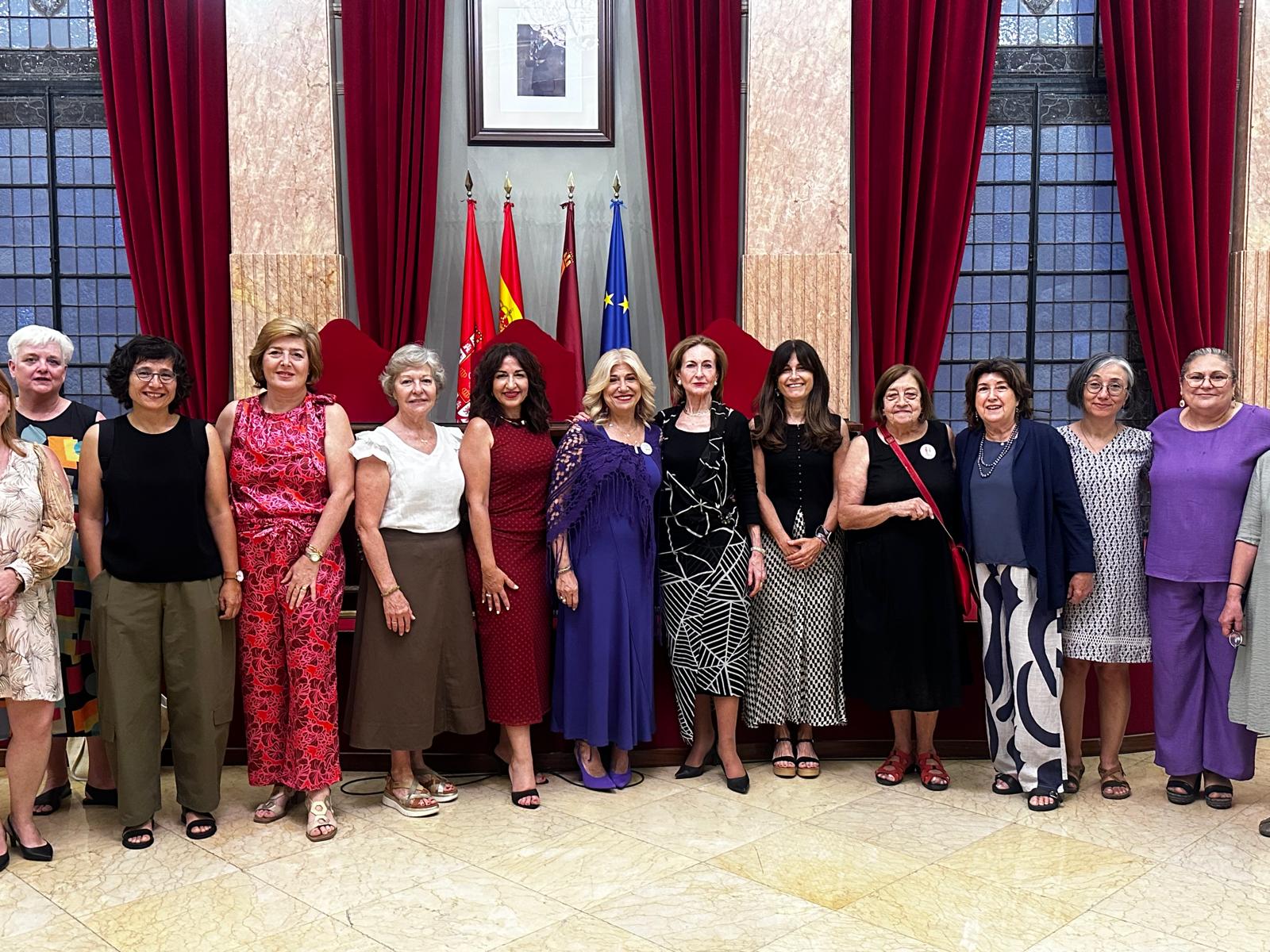
- Wedsneday 10th June. 20.00h Reception for participants at Murcia City Hall, hosted by regional and local authorities. Address: Glorieta de España, 1, 30004 Murcia
- Thursday 11th June. 13.30-15.00h Lunch at La Toga. Address: Paseo Menéndez Pelayo, at the corner of Plaza de la Universidad, 1, 30001, Murcia
- Thursday 11th June.
A tour of the city of Murcia hosted by the City Council of Murcia. Address: Glorieta de España, 1, 30004 Murcia - Friday 12th June. 13.30-15.00h Lunch at La Toga. Address: Paseo Menéndez Pelayo, at the corner of Plaza de la Universidad, 1, 30001, Murcia
- Friday 12th June. 20.30h. Gala dinner at Real Casino de Murcia. Address: Calle de la Trapería, 18, 30001 Murcia
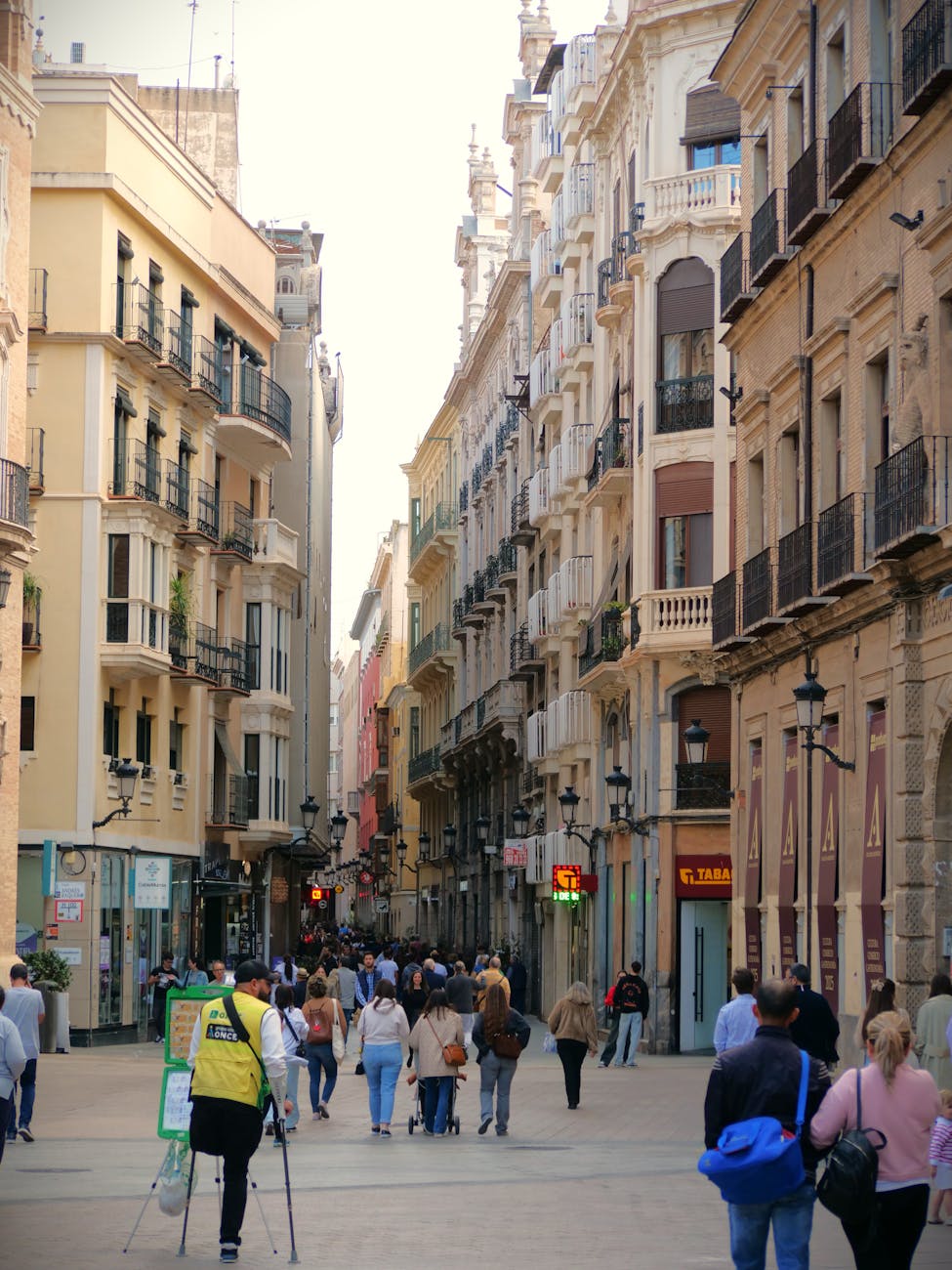
- Saturday 13th June. 12:30h. Jane Jacobs Walk through the city of Murcia, organized by the “Territorial Restructuring and Social Inequalities” (RETYDES) Research Group of the Department of Sociology at the University of Murcia and the City of Murcia
Other off-program activities that may be of interest
- Jaume Plensa Exhibition: “Inner Matter”
Place: (Old Prision/ Carcel Vieja). Address: Av. General Primo de Rivera, 2, 30008 Murcia - Visual and sound art exhibition by artist Pedro Guirao
Location: Centro cultural las Claras. Address: C. Sta. Clara, 1, 30008 Murcia - “Codex” Painting Exhibition by Gonzalo Sicre
Location: Sala de Verónicas. Address: C. Verónicas, 4, 30004 Murcia - Jiménez Godoy Collection Exhibition. “Believing in Art” Location: Palacio Almudí. Address: Plano de San Francisco, 8, 30004 Murcia

Infrastructure for daily life